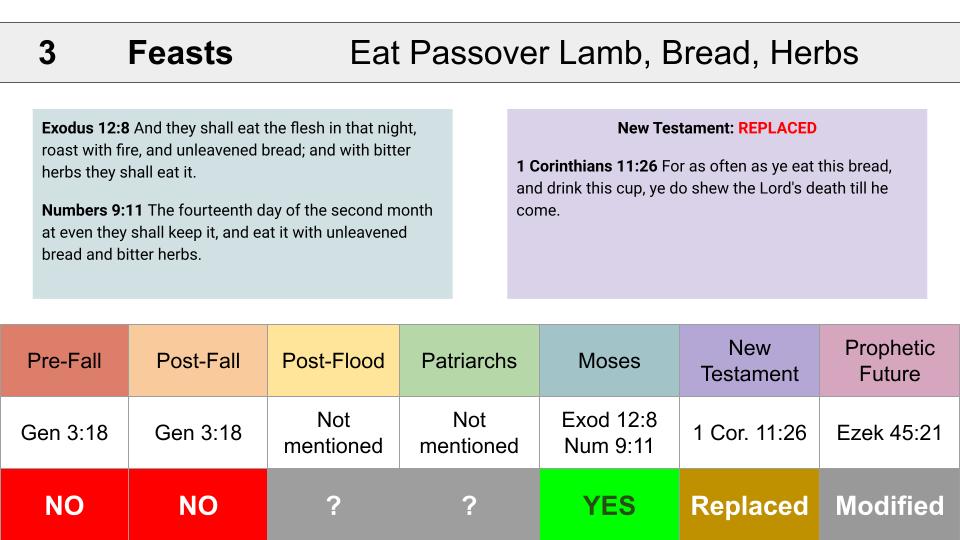
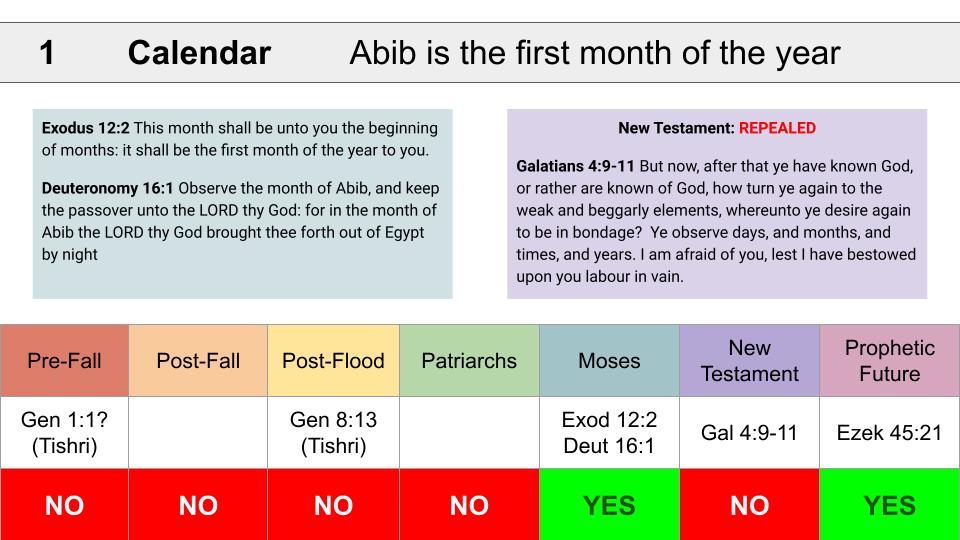
In our continuing look at the Passover laws of Moses in the Mosaic Code – you’ll notice that we have a handy dandy chart comparing this command across the times of God’s dealings with man. The academic term is dispensations – but we try to simplify it from a book that does not have enough pictures in it, into a tool to study the Bible chronologically. The more you study Genesis – the more you realize that it’s a big book – it covers roughly 3,500 years of human history, and 4 different time periods of God’s dealings with man. Which brings us to the Passover dinner…
While you can browse YouTube videos of virtual Passover seders or explanations thereof
or attend an actual one, (I’m not qualified to explain the Seder – I’ll leave that for our Jewish friends) let’s look at the Biblical requirements for a Passover seder:
And they shall eat the flesh in that night, roast with fire, and unleavened bread; and with bitter herbs they shall eat it.
Exodus 12:8
In case you missed it in Exodus and want a post-Sinai command:
The fourteenth day of the second month at even they shall keep it, and eat it with unleavened bread and bitter herbs.
Numbers 9:11
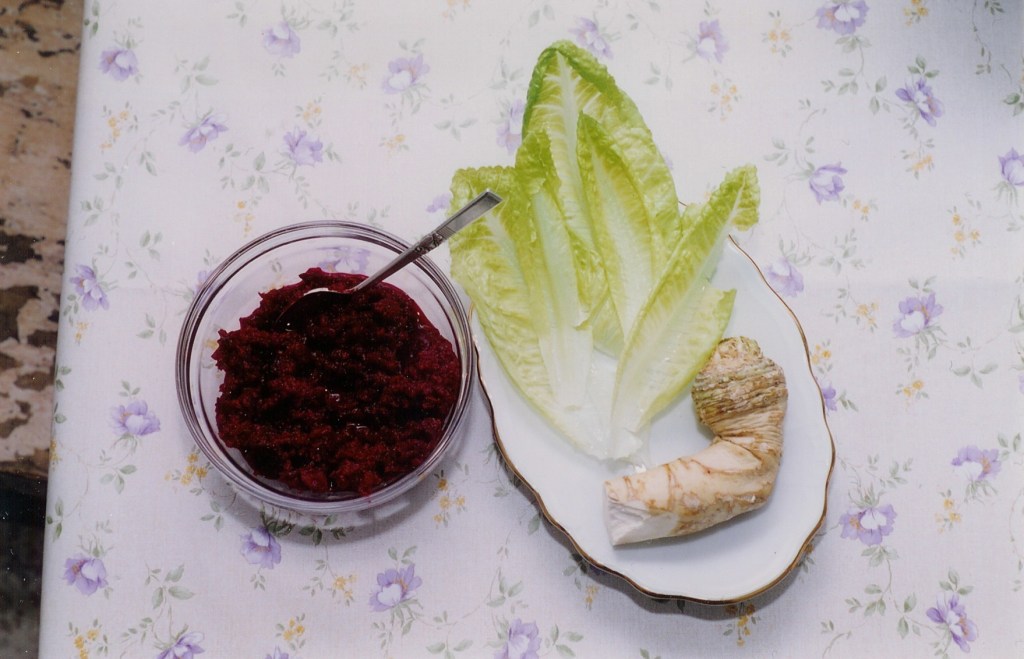
Notice the three elements – the Lamb, the Unleavened Bread, and the Bitter Herbs.
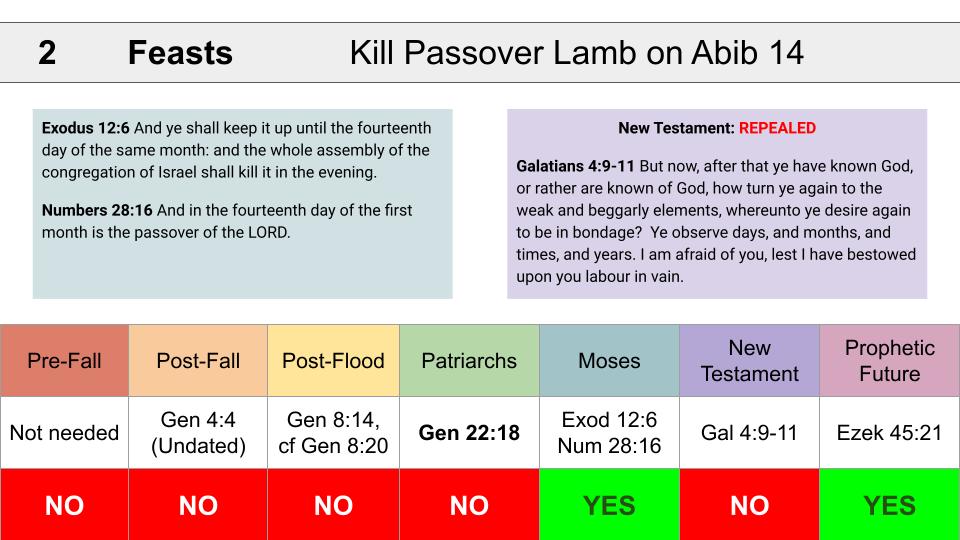
While there have been sacrifices going back to just after the Garden of Eden as we saw in Commandment 2, there is something distinctly different about Passover versus the early sacrifices: Meat!
Thorns also and thistles shall it bring forth to thee; and thou shalt eat the herb of the field;
Genesis 3:18
That’s right – from the Garden of Eden until the Flood – no meat was allowed to be consumed! So the first two dispensations could offer sacrifices but not partake of the meat of the sacrifice.
Every moving thing that liveth shall be meat for you; even as the green herb have I given you all things.
Genesis 9:3
So now that we are post-flood the meat of the sacrifice could be eaten – and yet we don’t read of any of the Patriarchs partaking of the meat of the offering. We do see a curious reference to bread with a sacrifice:
Then Jacob offered sacrifice upon the mount, and called his brethren to eat bread: and they did eat bread, and tarried all night in the mount.
Genesis 31:54
Now when we have the New Testament we see Jesus modifying the procedure for observance of Passover – let’s look at what Paul says that was so important that it was specifically revealed to the apostle born out of due season:
[23] For I have received of the Lord that which also I delivered unto you, That the Lord Jesus the same night in which he was betrayed took bread:
1 Corinthians 11:23-28
[24] And when he had given thanks, he brake it, and said, Take, eat: this is my body, which is broken for you: this do in remembrance of me.
[25] After the same manner also he took the cup, when he had supped, saying, This cup is the new testament in my blood: this do ye, as oft as ye drink it, in remembrance of me.
[26] For as often as ye eat this bread, and drink this cup, ye do shew the Lord’s death till he come.
[27] Wherefore whosoever shall eat this bread, and drink this cup of the Lord, unworthily, shall be guilty of the body and blood of the Lord.
[28] But let a man examine himself, and so let him eat of that bread, and drink of that cup.
Notice something missing? The bitter herbs (Hebrew: Maror)!
Interestingly enough Jewish scholars claim:
the biblical notion of eating maror to remember our slavery no longer applies
https://www.chabad.org/holidays/passover/pesach_cdo/aid/1749/jewish/What-Is-Maror.htm
In the New Testament we see the Lord’s Supper replacing Passover as a required observance for the Christian. And yet as we saw – this isn’t the end of Passover. In the Millennial Kingdom it will return – but without the bitter herbs!
In the first month, in the fourteenth day of the month, ye shall have the passover, a feast of seven days; unleavened bread shall be eaten.
Ezekiel 45:21
So we see across the dealings of God with man:
- Innocence – no sacrifice needed, for no sin; and because of no sin, no death
- Conscience – sacrifice needed, but man not able to partake of the sacrifice
- Government – sacrifice needed, man now allowed to eat meat but not specified if partook of sacrifice
- Promise – sacrifice needed, interestingly one sacrifice is associated with eating of bread
- Law – sacrifice needed, associated with bread and bitter herbs
- Grace – sacrifice was finished, commemorated with bread and grape juice (blood of the lamb)
- Kingdom – sacrifice reinstated, associated with bread but not bitter herbs.
So – is there significance to the fact that after The Messianic Passover Lamb was sacrificed, the bitter herbs were removed from the ordinance?
As is thrown out on Wikipedia,
The word derives from the Hebrew word mar (מֵר or מָרָה, “bitter”), and so may be related to the English word myrrh (through Aramaic ܡܪܝܪܐ mriro, cognate with Arabic مرّ murr).
https://en.wikipedia.org/wiki/Maror#Biblical_source
Is there a connection between the Hebrew “bitter herbs” and the myrrh of the wise men?
Myrrh was also a product of Arabia, and was obtained from a tree in the same manner as frankincense. It was a spice and was used in embalming. It was also sometimes mingled with wine to form an article of drink. Such a drink was given to our Savior when He was about to be crucified, as a stupefying potion (Mark 15:23). Matthew 27:34 refers to it as “gall.” Myrrh symbolizes bitterness, suffering, and affliction. The baby Jesus would grow to suffer greatly as a man and would pay the ultimate price when He gave His life on the cross for all who would believe in Him.
https://www.gotquestions.org/gold-frankincense-myrrh.html
Was the “bitter herbs” as myrrh a prediction of his burial?
Nicodemus came, Nicodemus who didn’t believe on that occasion, and who was warned that he would be condemned if he didn’t believe. That was one of the harshest conversations Jesus ever had with a spiritual leader. He has now made up his mind and also become a follower of Jesus. He had first come to Him by night. He brings “a mixture of myrrh and aloes, a hundred pound weight.” Best calculation that I can do is about 65 pounds; that would be fit for a king, for this man’s got some means as well. He shows up….
Myrrh is a fragrant, gummy resin that’s made in a powdered form – very, very strong fragrance. And aloes you’re more familiar with. It comes from the leaves of the sandalwood tree and also is an aromatic powder. And they mix all of that so that they would literally overpower the stench with other fragrance, and they would just dump it in great quantities in between the strips as they wrap the body and then put a cloth over them.
https://www.gty.org/library/sermons-library/42-290/the-supernatural-burial-of-christ
 Dispensationalism and the Law